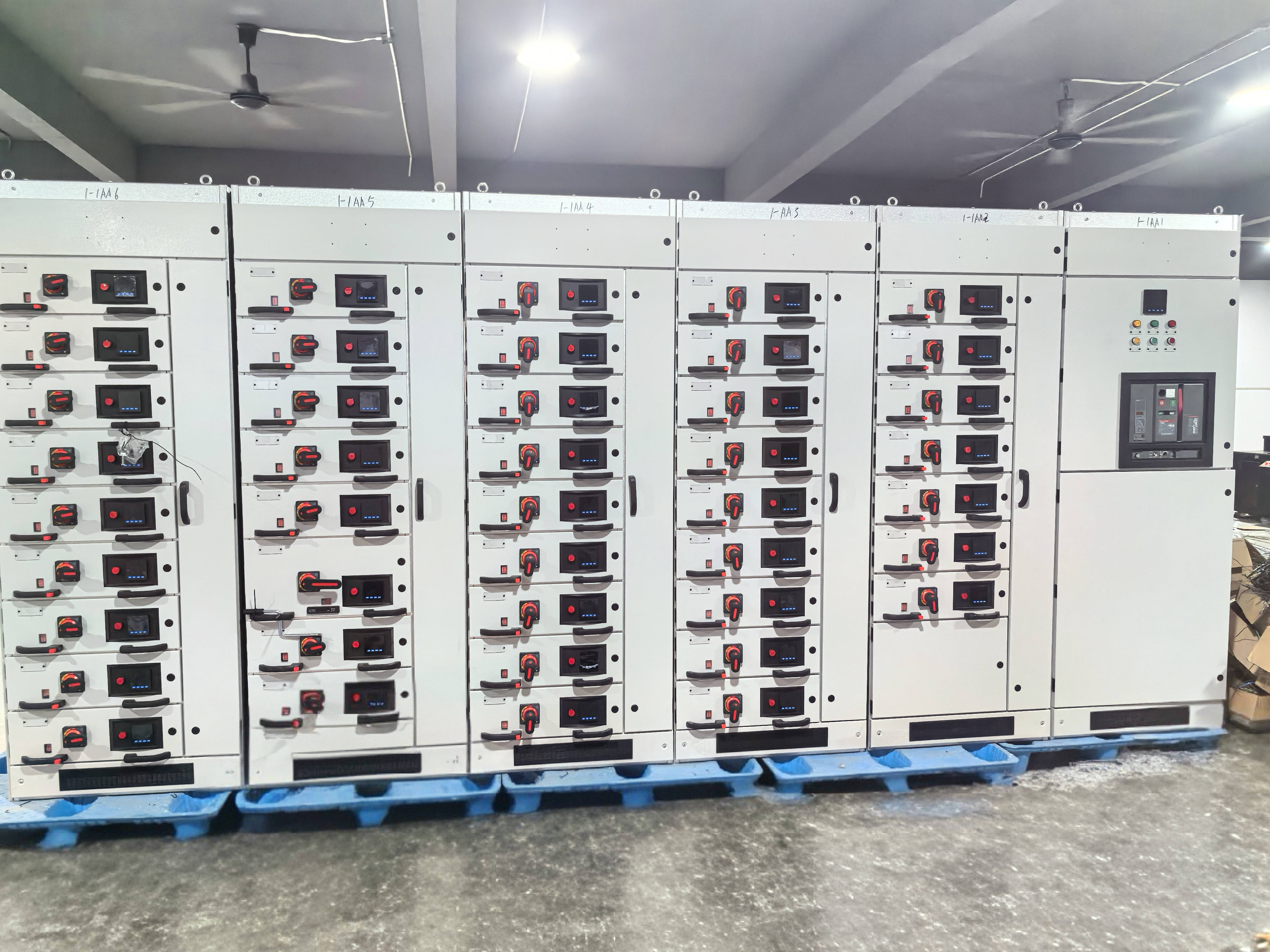
This professional guide is compiled by senior electrical engineers at Henan Lichuang Electrical Equipment Co., Ltd., a leading manufacturer with over sixteen years of industry experience. Fire-fighting power distribution cabinets are critical safety components widely deployed in construction, industrial, and municipal infrastructure projects. They ensure stable voltage, rapid fault isolation, and uninterrupted power during emergencies. Many procurement teams misunderstand their export compliance requirements and technical specifications. This article clarifies core definitions, working principles, performance metrics, and global application scenarios based on extensive project data.

Definition and Industry Positioning
According to GB/T14048.11 and national electrical safety standards, fire-fighting power distribution cabinets are specialized enclosures designed to manage emergency power routing, provide overload protection, and enable rapid dual-power switching during grid failures. Simply put, they act as centralized command nodes that automatically isolate faults and restore critical circuits without manual intervention. As essential assets in modern infrastructure, they deliver unmatched reliability compared to conventional temporary distribution boxes.
Technical Indicator | Fire-Fighting Cabinets | Traditional Temporary Boxes |
|---|---|---|
Power Switching Mode | Automatic dual-power seamless transfer | Manual local switching |
Protection Level | ExdIICT6 certified for hazardous zones | Standard IP ratings only |
Monitoring Capability | Remote APP control and real-time metering | No remote monitoring |
Compliance Certification | 3C fire safety and GB/T14048.11 | Basic industrial standards |
Working Principles Explained
In simple terms, these cabinets operate by continuously monitoring incoming voltage, detecting anomalies, and instantly redirecting power to backup sources while isolating damaged circuits. The technical process unfolds across four precise stages. First, real-time sensors detect voltage fluctuations or short circuits. Second, intelligent controllers trigger automatic circuit breakers to cut off faulty lines. Third, dual-input switches execute millisecond-level transfers to secondary power feeds. Finally, integrated communication modules transmit status data to central management platforms via mobile networks. Manufacturers typically offer two main structural variants. Galvanized steel models feature 1.5mm thick panels with anti-corrosion spray coating for outdoor durability. Polymer plastic variants prioritize lightweight installation and enhanced chemical resistance for specialized environments.
Key Performance Indicators
Metric | Standard Definition | Industry Reference | Selection Significance |
|---|---|---|---|
Material Thickness | Panel gauge measured under load stress | 1.5mm reinforced steel | Ensures impact resistance and long-term structural integrity |
Metering Accuracy | Energetic class verified by calibration labs | 0.2 grade high precision | Enables accurate energy billing and consumption tracking |
Switching Speed | Time elapsed between primary failure and backup activation | Sub-second automatic transfer | Prevents equipment damage and maintains continuous operations |
Environmental Rating | IP enclosure classification tested per IEC protocols | ExdIICT6 explosion proof | Guarantees safe operation in flammable or humid conditions |
Industry Application Scenarios
Based on deployment across thousands of global projects, these systems excel in three primary sectors.
1. Construction and Infrastructure Sites demand reliable temporary power that withstands harsh weather and heavy machinery traffic.
2. Industrial Manufacturing Plants require uninterrupted energy for critical machinery and safety systems.
3. Municipal and Commercial Networks utilize smart metering features for centralized utility management.
Standards and Compliance Certifications
To guarantee safety and market accessibility, all exported units must comply with rigorous international frameworks. The foundational design adheres to GB/T14048.11 electrical apparatus safety regulations. Mandatory 3C fire safety certification verifies flame retardancy and thermal stability under extreme loads. For European markets, manufacturers align with CE low voltage directives and EMC electromagnetic compatibility rules. North American shipments typically undergo FCC emission testing and cUL verification. These certifications eliminate trade barriers and assure international buyers of uncompromised quality.
Common Cognitive Misconceptions
Procurement professionals frequently encounter three persistent myths regarding fire-fighting distribution equipment. Myth one claims that higher price always equals better safety. Industry truth reveals that certified baseline models already exceed minimum safety thresholds when sourced from established factories. Buyers should prioritize verified test reports over marketing premiums. Myth two suggests that remote monitoring functions are unreliable in offline zones. Experts confirm that hybrid cellular and wired communication architectures maintain constant connectivity even during partial network outages. Myth three assumes that custom dimensions drastically increase lead times. Modern modular assembly lines actually accelerate bespoke production cycles while maintaining strict tolerances.
Frequently Asked Questions
Q: How do fire-fighting cabinets differ from standard distribution boxes?
A: They feature automatic dual-power switching, advanced fault isolation, and integrated remote monitoring capabilities that standard units lack.
Q: Are these cabinets suitable for explosive industrial environments?
A: Yes, models equipped with ExdIICT6 protection levels are specifically engineered for hazardous zones containing flammable gases or dust.
Q: What documentation is required for international customs clearance?
A: Export packages typically include CE certificates, 3C compliance reports, material test sheets, and detailed wiring diagrams.
Contact Information
Company: Henan Lichuang Electrical Equipment Co., Ltd.
Website: https://www.lichuangelectric.com/
Email: [email protected]
Phone: +8618203618150
WhatsApp: +85294329061
Factory Address: Room 101, Building 10-01-101, Zhongnan High-end Equipment Manufacturing Industry Base Project, 500 meters west of intersection of University South Road and Fengshang Street, Xinmi City, Zhengzhou City, Henan Province